
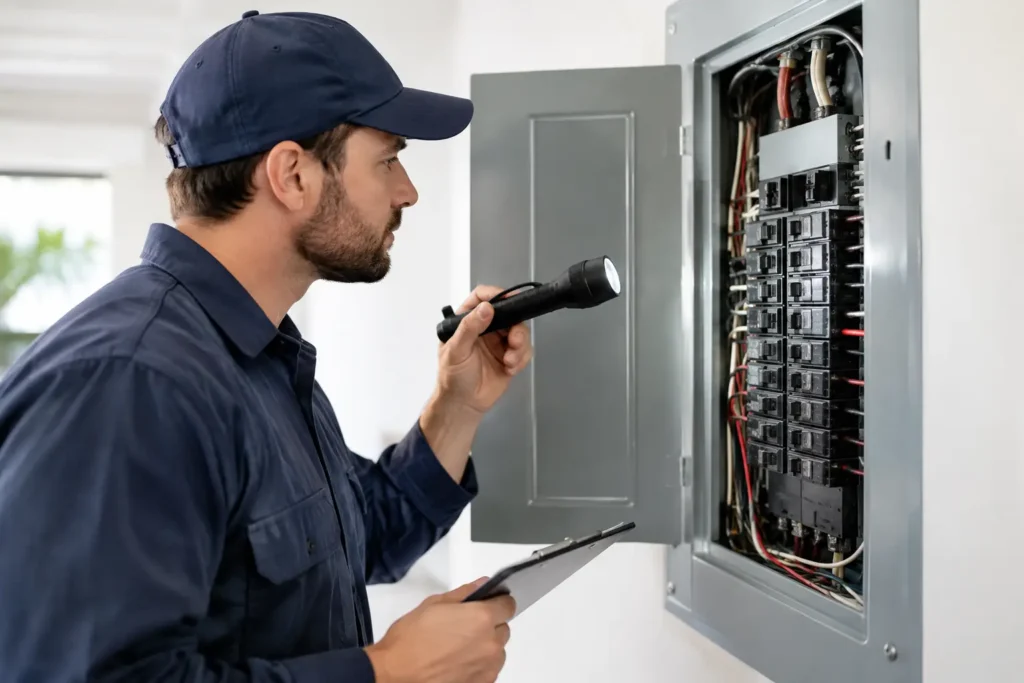
A panel can look perfectly ordinary while becoming the limiting factor for nearly every electrical improvement you want to make. The question of when to replace an electrical panel often comes up after a breaker trips, but the better time to ask is before adding an EV charger, renovating a kitchen, installing solar, or relying on backup power during a Northern Virginia outage.
Your electrical panel is the traffic controller for your property’s power. It distributes electricity to every circuit, protects wiring through properly sized breakers, and determines how much capacity your home can safely use at one time. When it is outdated, undersized, damaged, or simply full, replacing it is not cosmetic work. It is a safety and infrastructure decision.
8 signs it may be time to replace an electrical panel
1. Your breakers trip repeatedly
A breaker that trips once after an obvious overload may be doing exactly what it should. A breaker that trips regularly, especially when normal appliances are running, needs investigation. The cause could be an overloaded circuit, a failing appliance, loose wiring, a damaged breaker, or insufficient panel capacity.
Do not solve recurring trips by repeatedly resetting the breaker or installing a larger breaker. Breaker sizing must match the wire and circuit design. Increasing it without correcting the underlying issue can allow wiring to overheat. A licensed electrician should determine whether the problem is isolated to one circuit or reflects a broader panel upgrade need.
2. The panel feels warm, makes noise, or shows damage
A healthy electrical panel should not have a burning smell, visible scorching, melted insulation, corrosion, buzzing, or excessive heat around breakers. These are not wait-and-see conditions. Shut off power if it can be done safely, avoid touching damaged equipment, and arrange a professional assessment promptly.
Moisture damage is also a concern in garages, basements, exterior locations, and older utility spaces. Rust inside a panel can compromise connections and breakers. In some cases, an electrician can correct a localized issue. In others, replacement is the prudent path because damaged electrical equipment cannot provide reliable protection.
3. You still have a fuse box or obsolete panel equipment
Fuse panels can function safely when properly maintained, but they are usually not a practical foundation for a modern electrified home. They offer limited capacity, lack space for new circuits, and can be difficult to service correctly. Some older panel brands and equipment types may also have known reliability concerns or limited support for replacement components.
Age alone does not automatically require a panel replacement. A well-installed panel from the 1990s may still be in good condition. But an older home with original equipment deserves a careful evaluation, particularly before a renovation, sale, purchase, or major appliance upgrade. The decision should be based on the panel’s condition, manufacturer, available capacity, wiring, grounding, and the home’s actual load demand.
4. You are out of breaker space
A crowded panel is one of the clearest signs that your electrical system has fallen behind the home. Modern households often need dedicated circuits for a microwave, dishwasher, disposal, laundry equipment, HVAC components, sump pump, home office, workshop, hot tub, and kitchen appliances. Add an EV charger, battery backup, generator transfer equipment, or solar integration, and space disappears quickly.
Sometimes a subpanel is the right answer. It can add circuit space where the main service has adequate capacity and the existing panel remains in sound condition. But if the main panel is already maxed out, obsolete, or supplied by a service that cannot support the added load, a larger main panel and service upgrade may be the better long-term investment.
5. You are adding an EV charger
A Level 2 EV charger typically requires a dedicated 240V circuit. Depending on the charger and vehicle, that circuit may add a meaningful continuous load to the home. A proper installation starts with a load calculation, not a guess based on empty breaker slots.
Many Northern Virginia homes can accommodate EV charging without a full service upgrade. Others, especially homes with 100A service, electric heat, electric water heating, large HVAC systems, or planned electrification, may need a 200A panel upgrade or a managed charging solution. The goal is not simply to make the charger work. It is to make it work safely without forcing your home’s electrical system to operate at its limit.
6. A renovation is increasing electrical demand
Kitchen additions, finished basements, accessory dwelling spaces, remodeled bathrooms, and home-office conversions add more than square footage. They add receptacles, lighting, appliances, ventilation, and sometimes new HVAC loads. Building code may require new circuits, GFCI or AFCI protection, smoke and carbon monoxide detector updates, and changes to grounding or bonding.
This is why panel planning should happen early in the design process. Discovering that the panel lacks capacity after walls are closed creates delays and added expense. A qualified electrician can calculate the expected load, identify service limitations, and design the panel layout around both the renovation and future equipment.
7. You want a generator, battery backup, or solar-ready system
Backup power and solar equipment connect directly to the home’s electrical distribution system. They require careful coordination among panel capacity, transfer equipment, breaker placement, utility requirements, and critical-load priorities.
For example, a whole-home generator in the 20kW to 22kW range may require significant service and load planning. A battery backup system may need a backed-up loads panel or an integrated system design. Solar readiness may call for reserved panel space, busbar calculations, and equipment locations that comply with current code. An older, crowded panel can turn these projects into compromises. A modern 200A-plus panel gives the system room to grow.
8. Lights dim when large equipment starts
Brief dimming when an air conditioner, well pump, or other motor starts can occur in some homes. Frequent, dramatic, or widespread dimming is different. It can point to voltage drop, loose connections, undersized service equipment, or a utility-side issue.
Because these symptoms can involve energized components, they deserve professional troubleshooting. An electrician should inspect the panel, service conductors, grounding and bonding, major loads, and affected circuits before recommending replacement. A new panel is valuable when it solves a verified problem, not when it merely masks one.
Panel replacement versus a service upgrade
These terms are often used interchangeably, but they are not always the same project. A panel replacement means replacing the breaker enclosure and related components while keeping the existing service size, when the service is otherwise adequate. A service upgrade increases the amount of power available to the property, such as moving from 100A to 200A.
The right choice depends on a formal load calculation, the condition of the existing equipment, utility service requirements, and your plans for the property. If you are replacing a failed 100A panel in a small home with modest loads, retaining 100A may be reasonable. If you are installing an EV charger, converting gas appliances to electric, adding a large addition, and planning battery backup, 200A or more may be the smarter foundation.
A larger panel does not automatically mean a larger electrical service. Likewise, adding more breaker positions does not guarantee the system has more usable capacity. This distinction matters because safe design is based on calculated demand, conductor sizes, service equipment ratings, and code requirements.
What a professionally managed panel upgrade involves
A well-run upgrade begins with an on-site assessment. The electrician reviews your current service, panel condition, grounding, major appliances, HVAC, planned additions, and available utility capacity. From there, the project can be designed around the loads you have now and the systems you expect to add later.
For a straightforward residential panel upgrade, the on-site electrical work often takes six to eight hours, although utility coordination, permit timing, repairs, service mast work, and complex system integrations can extend the overall schedule. Your power will need to be shut off during portions of the work, so a professional team should explain the outage window before the project begins.
Permits and inspections are not paperwork to skip. They verify that the panel, breakers, grounding, bonding, labeling, clearances, and service equipment meet applicable requirements. Master-electrician supervision, clean installation practices, and accurate circuit labeling also make future maintenance and upgrades far easier.
At Voltex Electric, panel upgrades are designed as part of a larger power plan, whether that means a dedicated 240V EV circuit today or generator, battery, solar, and smart-home capability tomorrow.
Do not wait for a complete failure
Electrical panels rarely choose a convenient time to fail. Planning replacement before a renovation, vehicle purchase, equipment installation, or real-estate deadline gives you more options and better control over the design. It also allows the work to be coordinated with permits, inspections, and utility requirements instead of handled as an emergency.
If your panel is aging, full, warm, unreliable, or unable to support what you want to add, start with a professional evaluation. The best upgrade is not the biggest panel on the market. It is the correctly engineered electrical foundation that keeps your property safe, capable, and ready for what comes next.