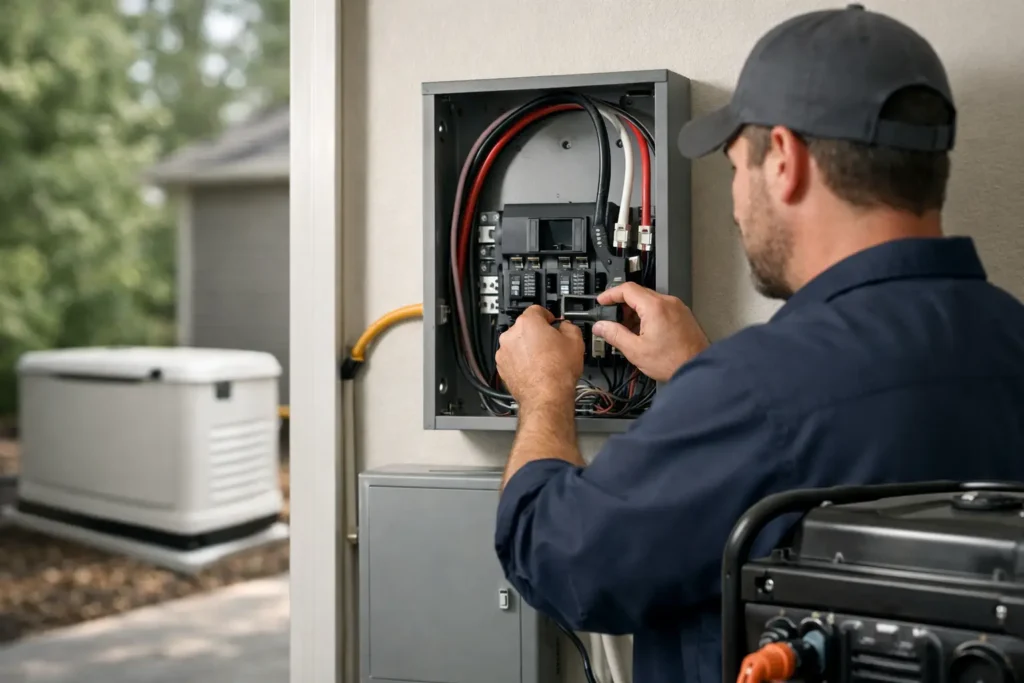
A transfer switch installation is the part of a backup-power system that determines whether an outage feels manageable or becomes a safety problem. Your generator or battery may have plenty of capacity, but it cannot safely power a home or business by being connected through an extension-cord workaround or an improvised panel connection. A properly designed transfer switch isolates your property from the utility, directs power where it is needed, and protects equipment, occupants, and utility crews.
For Northern Virginia homeowners, the right design starts with a practical question: what must remain operating when the grid is down? That answer is different for a McLean home with a well pump and a finished basement than for an Arlington townhome that needs refrigeration, internet, lighting, and a sump pump. It is also different for a small office protecting servers, security systems, and essential operations.
What a Transfer Switch Actually Does
A transfer switch is the controlled connection between utility power and a backup source, such as a standby generator, portable generator, or battery energy storage system. Under normal conditions, your electrical panel receives power from the utility. During an outage, the transfer switch disconnects the utility supply before backup power is introduced.
That separation is non-negotiable. It prevents backfeeding, a dangerous condition in which electricity flows from a generator into utility lines. Backfeeding can damage equipment, create fire risk, and endanger utility personnel working to restore service. It can also violate electrical code and equipment instructions.
The switch can operate manually or automatically. A manual transfer switch requires someone to start the generator, connect or activate the source as designed, and move the switch to generator power. An automatic transfer switch detects the outage, starts a compatible standby generator, and transfers selected loads with no action from the homeowner. For many properties, the choice comes down to budget, outage frequency, and how much hands-off reliability matters.
Transfer Switch Installation Starts With Load Planning
The equipment is only one part of the project. The real work is deciding how backup power will be allocated. A master electrician evaluates the electrical service, main panel, generator or battery capacity, starting loads, and the circuits that need protection.
A few circuits draw modest, predictable power: LED lighting, refrigerators, internet equipment, security systems, and selected outlets. Others have substantial startup demand. Central air conditioning, electric ranges, dryers, hot tubs, well pumps, and large motors can quickly exceed the available output of a generator or battery if they are not properly managed.
A critical-load setup is common when the backup source has limited capacity. It may support refrigeration, kitchen outlets, a gas furnace blower, a sump pump, lighting, garage door operation, and communications equipment. This approach keeps the system focused, often lowers equipment cost, and avoids asking a generator to carry unnecessary demand.
Whole-home backup is a different design. It may be appropriate for a larger standby generator, often in the 20kW to 22kW range depending on the home and load calculation, or for a coordinated battery system. Whole-home does not always mean every appliance can run at once. Load-management controls may temporarily shed nonessential equipment, such as electric heat strips or an EV charger, so essential circuits remain stable.
For properties with 200A or larger electrical service, an installation should also account for where the home is headed. A panel that is already tight on space may need an upgrade before adding generator controls, a Level 2 EV charger, solar-ready equipment, or a battery backup interface. Future-proofing the electrical infrastructure during one planned project is usually cleaner and more cost-effective than revisiting the panel repeatedly.
Manual, Automatic, and Interlock Options
There is no universal best option. The best transfer equipment matches the backup source, the property, and the owner’s expectations.
A manual transfer switch is a strong fit for many portable-generator systems. It gives the owner a defined set of selected circuits and clear operating controls. During an outage, the generator still requires fuel, startup, and manual activation, but the connection to the panel is code-compliant and organized.
An automatic transfer switch is typically paired with a permanently installed standby generator. When utility power fails, the system can start the generator and transfer power automatically. This is especially valuable for homeowners who travel, households with medical equipment, properties with sump-pump exposure, and businesses where an unattended outage can create real losses.
A listed generator interlock can also be an appropriate solution in certain panel configurations. Rather than using a separate transfer switch enclosure, the interlock mechanically prevents the main utility breaker and generator breaker from being on at the same time. It can be a cost-conscious option, but it must be compatible with the specific electrical panel and installed according to its listing and local code requirements. It also requires thoughtful load management because it may allow the generator to feed more of the panel.
Battery backup systems add another layer of design. Their control equipment may perform transfer functions while coordinating solar production, battery discharge, utility charging, and protected-load panels. This is not a place for generic equipment selection. The electrical design must follow the manufacturer’s specifications, the property’s service configuration, and the homeowner’s resilience goals.
What a Professional Installation Includes
A professional transfer switch installation begins with a site assessment, not a guess based on generator wattage. The electrician reviews the main panel, available breaker space, service capacity, grounding and bonding, intended backup source, exterior equipment location, and the circuits or loads to be protected.
From there, the project is designed around the actual equipment. That may include a dedicated generator inlet, properly sized conductors, a transfer switch or interlock, selected circuit relocation to a critical-load panel, surge protection, and load-management controls. Exterior components must be installed in suitable locations with weather-rated materials and required clearances.
Permits and inspections matter because backup systems connect to the building’s main electrical distribution. In Northern Virginia jurisdictions, requirements can vary by locality, property type, and system scope. Professional permit management helps ensure the installation is reviewed against applicable code, rather than leaving a homeowner to sort out requirements after the work is complete.
The final step should include testing under controlled conditions. The contractor verifies that utility and backup sources cannot operate in conflict, confirms the intended circuits are energized, checks generator or battery communication where applicable, and explains safe operation. Clean labeling is also essential. During an outage, no one should have to guess which breaker, inlet, or control serves the backup system.
Common Mistakes That Create Expensive Problems
The most serious mistake is attempting to power a panel through an unapproved connection. Generator cords should never be plugged into a dryer outlet, range outlet, or other receptacle to energize a building. That is backfeeding, and it is unsafe even if it appears to work temporarily.
Another common problem is sizing around running watts alone. A generator may handle the steady demand of a refrigerator but struggle when a pump or compressor starts. Load calculations and real-world operating priorities matter more than a simple equipment label.
Homeowners also sometimes choose a transfer switch before confirming panel compatibility or available capacity. Older panels, crowded breaker spaces, and undersized services can change the scope. Addressing those conditions upfront is better than forcing a new backup system onto outdated infrastructure.
Finally, an automatic system still needs a plan. Standby generators need periodic exercise and maintenance. Portable units need safe fuel storage and a clear operating procedure. Battery systems need realistic expectations about runtime, recharge sources, and which high-demand appliances will be supported.
A Better Long-Term Backup Power Decision
The right backup system should support the way you live, not simply provide a number on a spec sheet. If your priority is keeping a basement dry, protecting refrigerated food, maintaining internet access, and operating essential lighting, a targeted critical-load design may be ideal. If outages would affect a home office, medical needs, a large property, or business continuity, automatic whole-home or managed-load backup may justify the investment.
Voltex Electric approaches these projects with master-electrician supervision, upfront system design, permit coordination, and clean installation practices. The goal is not merely to connect a generator. It is to build a safe power path that works with your current electrical system and leaves room for EV charging, solar, batteries, and future electrification.
When the lights go out, backup power should be predictable. A properly planned system gives you clear priorities, safe operation, and an electrical foundation ready for the next upgrade.