
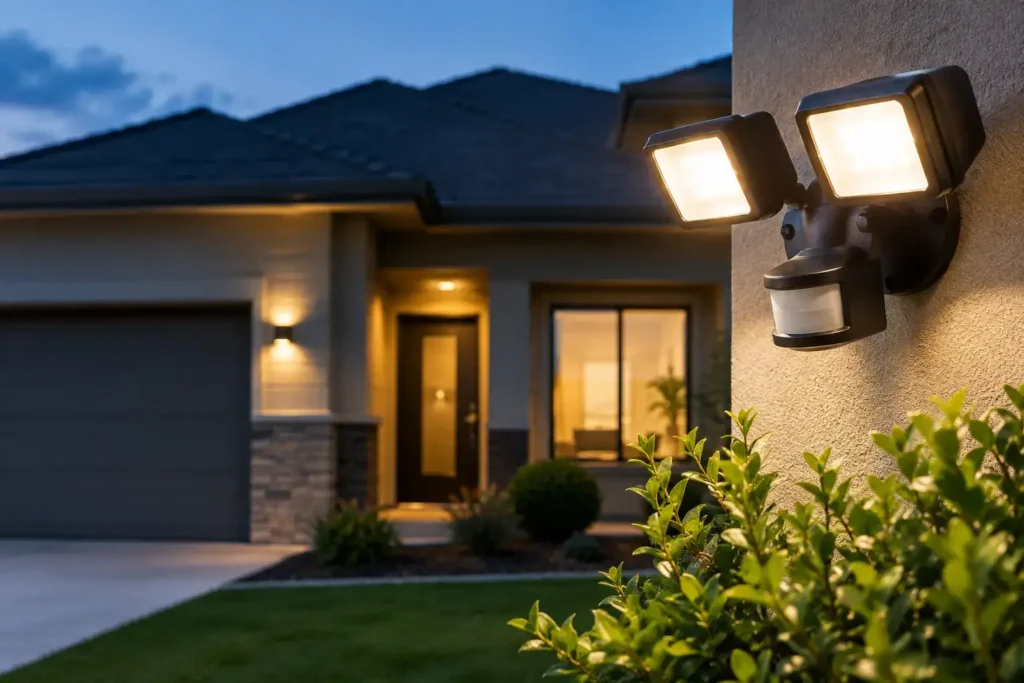
A light mounted over the garage can make a driveway brighter while leaving the side gate, rear patio door, and path to the electrical panel in complete shadow. That is why the best security lighting placement tips start with coverage, not fixture count. A well-designed system makes approach routes visible, removes hiding places near the house, and supports safe movement without turning your property into a source of glare for neighbors.
For Northern Virginia homeowners, placement deserves as much planning as the fixtures themselves. Mature landscaping, deep roof overhangs, stone facades, detached garages, and additions can all create blind spots that are easy to miss during the day. The goal is controlled, useful light where a person needs to see and be seen.
Start With the Routes People Actually Use
Walk your property at night before choosing locations. Begin at the street or driveway, then follow the path a visitor, delivery driver, family member, or intruder could take to reach the home. Look for changes in grade, steps, gates, side yards, basement entries, and doors that sit beyond the main driveway lighting.
Front entries need enough even light to identify a visitor and use locks safely. A pair of wall-mounted fixtures flanking the front door often provides better facial visibility than one bright fixture above it, which can cast shadows under a hat brim or brow. If your entry has a covered porch, check that the fixture is not blocked by the porch ceiling, columns, or decorative trim.
The garage and driveway are another priority, but they should not be the only priority. Position lighting to cover the transition from driveway to side yard and from garage to interior entry. On a corner lot, a fixture aimed only toward the driveway may leave a long side elevation unprotected.
Rear and side doors should receive the same attention as the front of the home. These entrances are frequently used for trash, pets, patios, and access to a basement or mudroom. More importantly, they are often less visible from the street. A modest, well-aimed fixture near each exterior door is usually more effective than relying on one oversized floodlight mounted high on the garage.
Best Security Lighting Placement Tips by Area
Front door and porch
Install lighting high enough to avoid easy tampering but low enough to illuminate faces and the lock area. For most homes, fixtures around the door height or mounted under a covered entry work well. Select a warm-to-neutral color temperature that provides clear visibility without making the entry feel harsh. Extremely cool white light can look stark and may produce distracting glare against light-colored siding or stone.
If you use a smart doorbell camera, avoid placing a bright fixture directly behind a visitor. Backlighting can reduce the camera’s ability to capture a useful face image. Side lighting or a fixture angled downward toward the approach path generally creates better results.
Driveway and garage
Garage lighting should reach the vehicle doors, driveway edges, and the route to the house. Mounting fixtures on both outer garage corners can provide broad coverage, but aiming matters. Direct the beam down and across the driveway rather than outward toward the street or a neighbor’s windows.
For a long driveway, consider several lower-output lighting zones rather than one high-wattage floodlight at the house. This approach improves depth perception, reduces shadows around parked vehicles, and avoids the severe contrast created by one overly bright source.
Side yards, gates, and utility access
Side yards are common blind spots, especially in older homes with narrow setbacks and dense plantings. Place a motion-activated fixture near a gate, side door, or passageway where it can illuminate the full length of the route. Avoid placing it so close to a fence or wall that the light reflects back into the sensor or creates a bright patch with darkness beyond it.
Do not overlook electrical equipment, HVAC access, and exterior storage areas. Lighting these locations makes routine service safer and can help deter unauthorized activity. Fixtures near electrical equipment must be installed with proper clearances and access in mind. A licensed electrician can evaluate the wall location, wiring path, weather exposure, and circuit load before installation.
Rear doors, patios, and decks
A patio door needs enough light to operate safely, but the fixture should not shine directly into the home. Downward-facing wall lights, soffit-mounted fixtures, or carefully aimed motion lights can cover the threshold and steps without flooding the interior through glass doors.
Decks present a trade-off. Decorative step and railing lights improve footing, while a brighter motion-controlled fixture can provide security coverage beyond the deck perimeter. Using both is often the better solution: low-level lighting for everyday use and a separate sensor-controlled fixture aimed toward the yard or access route.
Aim Light Downward, Not Outward
Security lighting works best when it reveals people, obstacles, and activity without blinding the people who need to see. A fixture that shines into a camera, driver’s eyes, bedroom window, or neighboring property may actually reduce security by creating glare and deep shadows.
Choose fixtures with shielding or adjustable heads, then test them after dark. The beam should reach the ground and target area without spilling far beyond your property line. Fixtures mounted too high can cast light over the intended zone; fixtures mounted too low may be vulnerable to damage or create sharp shadows behind shrubs and parked vehicles.
Landscaping changes the result over time. A fixture that clears a young boxwood today may be blocked by it in two seasons. Include exterior lighting in seasonal property maintenance: trim foliage away from fixtures and sensors, clean lenses, and confirm that mounting hardware remains secure.
Use Motion Sensors With Intention
Motion activation is useful because it draws attention to movement and limits unnecessary nighttime illumination. But poorly positioned sensors can become a daily frustration. If a sensor faces a busy sidewalk, street, or tree branch, it may trigger constantly. If it points too narrowly or sits behind a downspout, it may miss the route you need it to cover.
Set motion sensors to detect movement across their field rather than directly toward them whenever possible. Crossing motion is typically detected more reliably. Start with a shorter detection range and adjust gradually after several evenings of real-world use.
Smart controls add another layer of flexibility. A homeowner can schedule entry lighting to come on at dusk, receive an alert when a side-yard fixture activates, or temporarily increase lighting during travel. These features work best when the underlying electrical installation is dependable. Wi-Fi controls cannot compensate for undersized boxes, failing connections, exposed wiring, or an overloaded circuit.
Plan the Electrical Work Before Adding Fixtures
Exterior security lighting is not simply a matter of attaching a fixture to siding. The installation may require a new circuit, properly rated outdoor boxes, weatherproof covers, conduit, switches, photocells, or low-voltage controls. Older Northern Virginia homes can also have limited circuit capacity, aging wiring, or exterior connections that no longer meet current expectations for weather protection.
A qualified electrician will determine whether existing wiring can safely support the new load and whether a dedicated circuit is appropriate. LED fixtures use far less power than older halogen floodlights, but capacity is only one part of the decision. Proper grounding, secure mounting, moisture-resistant connections, code-compliant wiring methods, and access for future service all matter.
Permits and inspections may be required when new circuits or substantial wiring changes are involved. Handling that process correctly protects the home and provides accountability that a quick handyman installation cannot match. It also keeps the work ready for future renovations, smart-home upgrades, and other electrical additions.
Avoid the Common Placement Mistakes
The most common mistake is concentrating all light on the front of the house. A bright front elevation may look secure from the street while leaving the sides and rear unmonitored. Another is using maximum brightness as the only strategy. More lumens are not automatically safer when they create glare, wash out camera footage, or bother nearby homes.
Avoid relying solely on decorative landscape lighting. Path lights are valuable for navigation, but they rarely provide enough vertical illumination to identify a person near a door or gate. Likewise, do not place security fixtures where tree limbs, awnings, gutters, or seasonal decorations will block either the beam or the sensor.
The strongest layout is layered: steady low-level light at key entries, task lighting for paths and steps, and motion-activated coverage at less frequently used access points. This gives the property a deliberate, comfortable appearance while preserving the visibility needed when something unusual happens.
Good security lighting should feel quiet and intentional, not like a stadium installed on the side of the house. When each fixture has a defined job, your home is easier to navigate, your cameras have better conditions to work with, and the system remains practical for years rather than becoming another exterior feature you have to work around.
Need this done at your home? Call Voltex Electric at (703) 944-8653 or request a free quote at voltexelectric.com/contact/ – a licensed master electrician serving Vienna, Fairfax, McLean, Arlington and Northern Virginia.