A warm outlet behind a dresser, a breaker that trips only when the microwave runs, or lights that dim when the HVAC starts are not quirks to live with. They are the kinds of early warnings electrical fire prevention is designed to catch before a hidden connection, overloaded circuit, or aging panel becomes a property-damaging event.
For homeowners in Northern Virginia, the risk often rises during renovations and modernization. An older home may have been built for a few kitchen appliances and basic lighting, not a Level 2 EV charger, a finished basement office, smart controls, high-output kitchen equipment, and today’s connected lifestyle. Safe electrical work begins with understanding what the system can actually support.
Electrical Fire Prevention Starts at the Panel
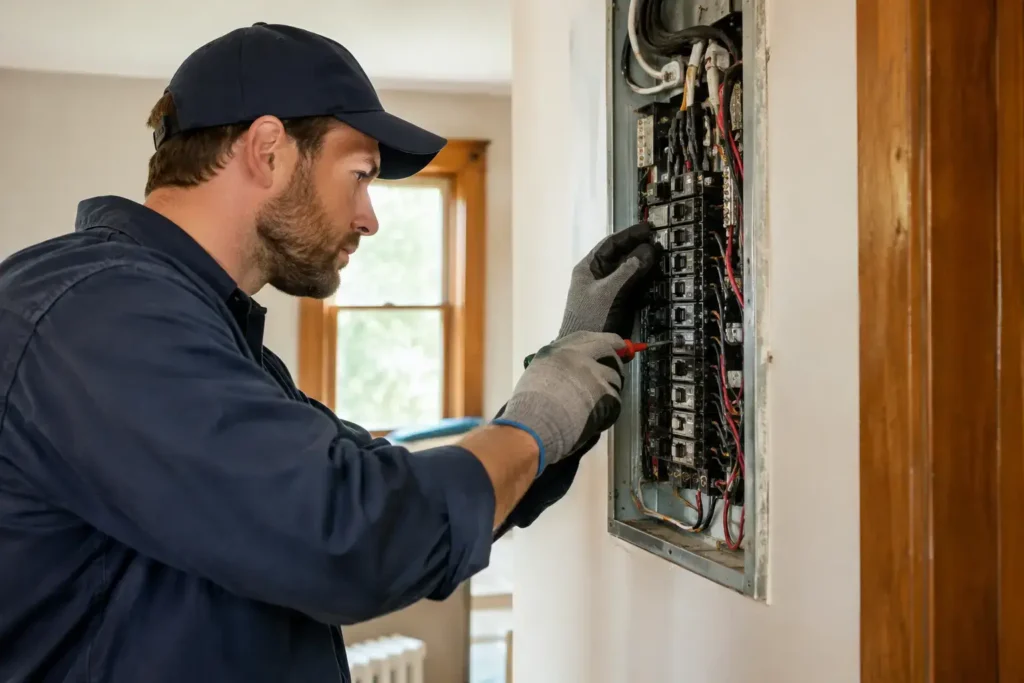
Your electrical panel is the traffic control center for every circuit in the house. If it is outdated, damaged, undersized, or crowded with added circuits, the entire system has less margin for safe operation. A panel may still provide power while concealing corrosion, loose breaker connections, overheating conductors, or a load calculation that no longer reflects how the home is used.
Many established homes in Vienna, McLean, Fairfax, Arlington, and Alexandria were built with 100-amp service. That can be adequate for some households, but it deserves a professional capacity review before adding major loads. A 200-amp panel is often the practical foundation for a significant renovation, 240V appliance circuit, or Level 2 EV charging installation. The right answer depends on the home’s calculated load, existing equipment, available service capacity, and planned improvements – not simply on choosing the largest panel available.
A licensed electrician should inspect the panel for heat damage, improper double taps, mislabeled breakers, loose terminations, recalled equipment, and signs that previous additions were not completed to current code. Panel upgrades also require permits and inspections. Those steps are not paperwork for its own sake. They verify that the service equipment, grounding, breaker sizing, and conductor protection work together as designed.
Know the Warning Signs Before a Failure
Electrical fires often begin out of sight, inside walls, junction boxes, service equipment, or appliances. Homeowners should act quickly when they notice persistent warning signs rather than resetting a breaker and moving on.
The most concerning symptoms include burning odors, buzzing or crackling, discoloration around an outlet or switch, a warm cover plate, flickering lights, shocks or tingling when touching equipment, and breakers that trip repeatedly. A breaker is designed to interrupt power when a circuit is overloaded or faulted. Repeated tripping means the cause needs to be identified. Replacing a breaker with a larger one without verifying the wire size and circuit design can create a serious fire hazard.
A single brief light flicker during a severe storm may be a utility issue. But lights that dim whenever a large appliance starts, or that flicker in one room without an obvious cause, justify an electrical evaluation. The distinction matters. Electrical safety is not about treating every inconvenience as an emergency; it is about recognizing patterns that point to failing components or inadequate capacity.
Stop Overloading Circuits at the Source
Power strips and extension cords are useful temporary tools, not permanent infrastructure. When a home office, entertainment center, garage workshop, or kitchen depends on them every day, it usually means the room needs additional properly installed receptacles or dedicated circuits.
High-demand equipment should have the circuit it requires. This commonly includes EV charging equipment, electric ranges, dryers, HVAC equipment, dishwashers, garbage disposals, and certain workshop tools. Sharing a circuit can be appropriate for general-use receptacles and lighting when the circuit is correctly designed. It is not appropriate to assume every device can share capacity simply because there is an open outlet nearby.
Pay attention to where cords are routed. Cords pinched under rugs, run through doorways, covered by furniture, or placed in areas where they can be damaged may overheat or fail. Never use an extension cord as a substitute for wiring inside a wall. If a location needs permanent power, the durable solution is a code-compliant outlet installed where it is needed.
Upgrade Aging Outlets, Wiring, and Protection Devices
Older outlets can lose their grip over time. A plug that slips out easily can arc at the connection point, creating heat that may damage the receptacle and plug. Replace cracked, loose, scorched, or unreliable receptacles promptly, and use devices rated for the application.
Modern code requirements also add protection where risk is higher. Ground-fault circuit interrupters, commonly called GFCIs, help protect people from shock in areas exposed to moisture, including kitchens, bathrooms, garages, laundry areas, exterior locations, and unfinished spaces. Arc-fault circuit interrupters, or AFCIs, are designed to detect certain dangerous arcing conditions that standard breakers may not identify. They are especially valuable in living areas where wiring and cords can be damaged over time.
These devices can trip for legitimate reasons, and diagnosing the cause takes more than swapping parts. A nuisance trip may come from an appliance, damaged wiring, an overloaded circuit, moisture, or an incompatible device. A qualified electrician can test the circuit and correct the underlying issue rather than defeating the safety feature.
Homes with older wiring deserve extra attention during remodeling. Knob-and-tube wiring, aluminum branch-circuit wiring, ungrounded receptacles, and improvised splices each call for a different approach. The goal is not to overcorrect a home that is functioning safely, but to identify what should be repaired, upgraded, or replaced before new loads and renovations make the risk worse.
Use Renovations to Future-Proof the Electrical System
Opening walls for a kitchen remodel, basement finish, addition, or major lighting project is the best time to address electrical infrastructure. Installing additional circuits, modern grounding, hardwired smoke alarms, dedicated appliance circuits, and structured wiring is far cleaner and more cost-effective when access is already available.
Smart-home devices can add convenience, but they should be selected and installed with the circuit design in mind. Dimmers, smart switches, LED fixtures, and connected controls need compatible equipment and correctly sized boxes. A professional installation avoids overloaded boxes, loose wire connections, and mismatched components that create unreliable operation.
For EV owners, a Level 2 charger should never be treated like a simple outlet addition. It requires a load calculation, appropriately sized 240V circuit, correct breaker and conductor sizing, a suitable installation location, and permit-driven inspection. Done right the first time, it delivers reliable charging without asking an aging panel to carry more than it safely can.
Everyday Habits That Reduce Electrical Fire Risk
Good electrical fire prevention includes simple homeowner habits. Keep electrical panels accessible and dry. Do not store paint cans, boxes, or household items in front of the panel. Test smoke alarms regularly, replace them according to manufacturer guidance, and make sure everyone in the home knows two ways out of sleeping areas.
Use appliances according to their instructions, particularly portable heaters, which should be plugged directly into a wall outlet and kept clear of bedding, curtains, furniture, and other combustible materials. Replace damaged appliance cords instead of taping them. Avoid using counterfeit or poorly made charging equipment, especially for phones, laptops, and power tools.
If you smell burning, see smoke, hear sustained arcing, or find an outlet or panel that is hot to the touch, turn off power only if it is safe to do so and contact emergency services when there is an active fire threat. Do not investigate a smoking panel or attempt a repair yourself. Electrical faults can escalate quickly once insulation and connections begin to overheat.
A safer home is built through informed upgrades, careful installation, and early attention to small signs that something is not right. Electrical systems should support the way you live now while leaving room for what comes next.
Need this done at your home? Call Voltex Electric at (703) 944-8653 or request a free quote at voltexelectric.com/contact/ – a licensed master electrician serving Vienna, Fairfax, McLean, Arlington and Northern Virginia.