
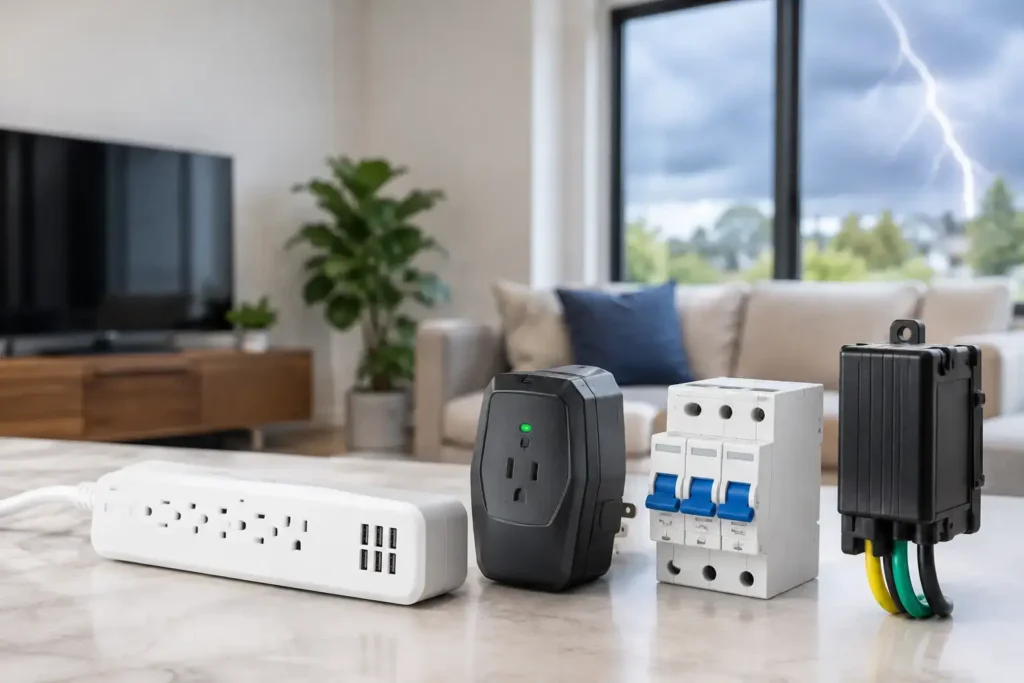
A premium television or smart thermostat can be damaged by a surge that lasts less than a second. The best surge protection devices do more than protect a single outlet – they create layers of protection at the electrical panel and at the equipment that matters most. For Northern Virginia homeowners updating older homes, adding EV charging, or building out connected-home systems, that layered approach is the sensible standard.
Why power surges are not just a lightning problem
Lightning is the most dramatic source of a surge, but it is not the most common. Utility switching, downed lines, transformer activity, and the normal cycling of large motors can all create voltage spikes. Inside the home, HVAC equipment, refrigerators, sump pumps, and other inductive loads can also introduce smaller transient events.
One large surge may cause immediate failure. More often, repeated smaller events gradually degrade circuit boards, control modules, networking equipment, appliances, and LED drivers. The result can look like an unexplained early equipment failure rather than obvious electrical damage.
A properly selected surge protection system redirects excess voltage safely toward the home’s grounding system before it reaches sensitive electronics. It does not make a home immune to every electrical event, but it substantially reduces a meaningful and preventable source of damage.
The best surge protection devices use layers
There is no single plug-in device that can protect every circuit in a house. The strongest setup starts at the service equipment and adds point-of-use protection where electronics are especially valuable or sensitive.
Whole-home surge protective devices
A whole-home surge protective device, commonly called an SPD, is installed at or near the main electrical panel. For most homes, a Type 2 SPD is the practical choice. It protects branch circuits throughout the house from surges entering through the electrical service and from many surges generated within the home.
This is the first device Voltex Electric evaluates when homeowners want meaningful, property-wide protection. A panel-mounted unit is especially valuable in homes with smart switches, networked appliances, modern HVAC controls, garage-door openers, home-office equipment, and EV charging equipment.
Look for a unit listed to UL 1449, the current safety standard for surge protective devices. A listed product is not a minor detail. The device is being connected to your home’s electrical distribution system, and the installation must match the manufacturer’s instructions, panel configuration, breaker requirements, and applicable code.
For many residential applications, an SPD with a nominal discharge current rating of at least 20kA is a solid starting point. Homes with larger services, more valuable equipment, or frequent utility disturbances may justify a higher-capacity device, often in the 40kA to 80kA range. Bigger numbers alone do not decide the right product, however. The panel layout, available space, lead length, grounding, and the device’s voltage protection rating all affect real-world performance.
Point-of-use protection for sensitive equipment
A quality plug-in surge protector is the second layer. Use one at a home-office workstation, entertainment center, networking cabinet, and other locations with concentrated electronics. These units are often referred to as Type 3 devices.
Avoid treating an inexpensive power strip as surge protection. A strip may provide extra outlets but have no meaningful suppression components. A legitimate surge protector should clearly identify its surge rating, safety listing, indicator status, and whether it includes protection for coaxial or data lines when those connections are relevant.
For a television wall, for example, the electrical outlet may be protected while the cable or Ethernet line provides another route for a surge. A complete equipment setup considers every conductive path connected to the device, not just the power cord.
What to compare when choosing a surge protector
Shopping by price or maximum joule rating alone can lead to the wrong decision. Joules can be useful for comparing similar plug-in products, but they do not tell the full story for a panel-mounted SPD. Focus on the specifications that match the device’s role.
The voltage protection rating, or VPR, indicates the voltage that may pass through under a standardized test condition. Lower is generally better when comparing devices rated for the same system voltage, although the product must still be appropriate for the electrical system it serves. Maximum continuous operating voltage, or MCOV, matters too. It helps show whether the device can remain connected safely under normal voltage conditions without unnecessarily operating.
Check the protection modes as well. A 120/240-volt residential system has multiple paths where a surge can occur, including line-to-neutral, line-to-ground, and neutral-to-ground. A well-designed whole-home device addresses the appropriate modes for the installation.
Finally, choose a device with clear visual status indicators. Surge components wear down over time. If the protection status light shows a fault or end-of-life condition, replacement is needed. An SPD can continue allowing power to flow while no longer providing its intended protection, which is why a visible indicator is more than a convenience.
Installation quality affects protection quality
Even an excellent surge protective device can underperform if it is installed poorly. Surge currents move extremely quickly, so conductor length and routing matter. The connecting leads should be as short and straight as practical, with minimal bends. Long, coiled, or poorly routed conductors add impedance and can raise the voltage that reaches equipment during a surge event.
Grounding and bonding deserve equal attention. A surge protector works by sending excess energy to the electrical system’s grounding path. If an older home has grounding deficiencies, loose connections, deteriorated service equipment, or improper bonding, installing an SPD alone does not correct those conditions.
This is why a professional installation begins with an assessment of the panel, service capacity, grounding electrode system, and available breaker space. In a Northern Virginia home with an older 100-amp panel, a homeowner may be planning several upgrades at once: a 200-amp panel, a 240-volt circuit for Level 2 EV charging, kitchen renovation circuits, and smart-home controls. Surge protection should be designed into that work rather than treated as an afterthought.
Permits and inspections may apply when panel work is performed, depending on the scope and local jurisdiction. A licensed electrician can select a compatible device, install it cleanly, label the work, and ensure the completed system meets code requirements.
Common mistakes that leave equipment exposed
The first mistake is relying only on plug-in strips. They protect devices connected to that strip, but they do not provide the service-level defense of a panel-mounted SPD. The second is assuming a GFCI or AFCI breaker provides surge protection. Those devices serve critical safety functions, but neither is a substitute for an SPD.
Another mistake is connecting a surge protector to a surge protector. Chaining power strips can create overheating and overloading risks, and it does not create a better protection strategy. Use a properly rated, direct plug-in device and avoid overloading the circuit.
Homeowners should also understand the limits. Surge protection does not correct persistent low voltage, high voltage, loose utility connections, or circuit overloads. A direct lightning strike can exceed the capacity of residential protection equipment. The goal is risk reduction through properly coordinated equipment, not a guarantee that no electrical damage can ever occur.
A practical approach for Northern Virginia homes
For most established homes in Vienna, McLean, Fairfax, Arlington, and nearby communities, the best starting point is a Type 2 whole-home SPD installed at the main panel, followed by quality point-of-use protection for computers, televisions, networking gear, and other concentrated electronics. If the home has a subpanel, detached structure, or long feeder run, the electrical layout may call for additional protection at those locations.
The right device depends on the panel and the home’s equipment, not a generic online ranking. A master electrician can identify whether your existing panel has the capacity, condition, and grounding needed to support a reliable installation – and address problems before they become more expensive repairs.
Need this done at your home? Call Voltex Electric at (703) 944-8653 or request a free quote at voltexelectric.com/contact/ — a licensed master electrician serving Vienna, Fairfax, McLean, Arlington and Northern Virginia.