A new EV can expose an old electrical system quickly. Many Northern Virginia homeowners assume the garage outlet will handle charging, then find that charging is slow, the circuit is shared, or the panel has no practical room for another major load. The most meaningful EV charging trends are not just about faster chargers. They are changing how homeowners plan panel capacity, garage wiring, renovation work, and the long-term value of a property.
For a home in McLean, Vienna, Fairfax, Arlington, or Alexandria, the right answer starts with the electrical system already in place. A professionally installed charging circuit can make daily driving simple, but it must be sized, permitted, and installed around the home’s actual capacity. That is the difference between adding equipment and building infrastructure that is ready for the next decade.
EV Charging Trends Start With Level 2 at Home
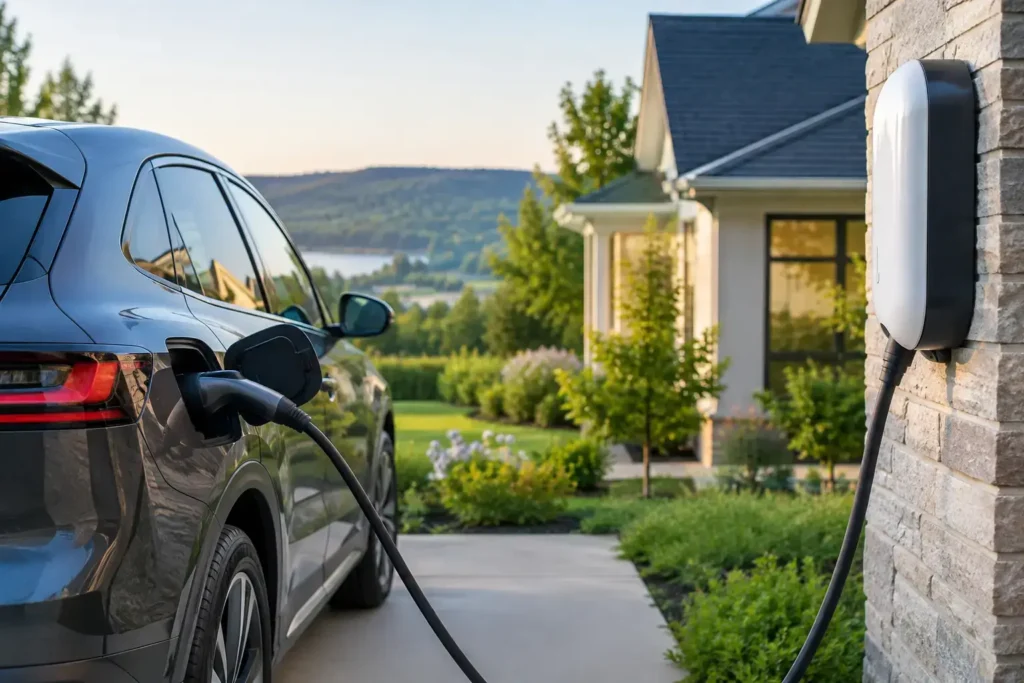
Level 2 charging has become the practical standard for homeowners who drive an EV regularly. It uses a dedicated 240V circuit, similar in principle to the electrical supply used for large household equipment, and it can provide substantially more charging capability than a standard 120V outlet. For many drivers, that means replenishing routine daily mileage overnight rather than planning around a public charging stop.
The equipment itself matters, but the circuit behind it matters more. A charger may be configured for different output levels depending on the vehicle, the charger’s rating, the wiring method, and the available electrical capacity. Higher output is not automatically better if it requires a costly service change that does not match how the household uses the vehicle. A master electrician should help determine the useful charging rate, not simply install the largest unit on the shelf.
Hardwired chargers are increasingly common because they create a clean, permanent installation with fewer exposed components. They can be an especially strong fit for finished garages, carports, and exterior parking locations where weather protection, cable routing, and mounting height deserve careful attention. Plug-in equipment can also be appropriate when the receptacle, circuit, and installation details are designed for that specific duty.
Panel Capacity Is the Real Decision
The most common question is whether a home needs a panel upgrade before installing an EV charger. The honest answer is: it depends. A newer 200A panel with available breaker space may support a dedicated charging circuit after a proper load calculation. An older panel, a crowded breaker layout, or a home with several large electric loads may call for a more involved solution.
A professional assessment looks beyond the number printed on the main breaker. Electricians evaluate the service rating, panel condition, available spaces, conductor sizing, existing loads, planned renovations, and local code requirements. A home may have physical room for a new breaker but still need a load calculation to confirm that adding continuous EV charging is appropriate.
In established neighborhoods, this work often reveals issues worth addressing before they become urgent. Older panels may have limited capacity, obsolete components, corrosion, poorly labeled circuits, or prior additions that were never organized for future expansion. A panel upgrade can provide more than a place for an EV breaker. Done correctly, it can create capacity for a kitchen renovation, additional HVAC equipment, workshop tools, or smart-home additions while improving safety and serviceability.
Load management is another trend changing the conversation. Certain approved charging systems can adjust charging output based on real-time household demand. This may allow a homeowner to add dependable charging without immediately increasing service capacity. It is not a shortcut around sound electrical design, and it is not right for every property. But for homes with a constrained existing service, it can be a smart option when specified and installed correctly.
Why “Available Breaker Space” Can Be Misleading
A panel can look half empty and still have limited capacity. Breaker spaces are physical locations in the panel. Electrical capacity is the amount of load the service can safely support. Those are related, but they are not the same thing.
Conversely, a full panel does not always mean the entire service must be replaced. In some cases, a properly designed subpanel or panel reconfiguration can create needed circuit space. The right path depends on the age and condition of the equipment, the service calculation, future plans, and inspection requirements. This is why a site visit is more useful than a guess based on a panel photo.
Smart Charging Is Becoming More Useful
Smart charging features are moving from novelty to practical household tools. Many current chargers can schedule charging during preferred hours, report energy use, manage access for multiple drivers, and notify an owner when charging is interrupted. For homeowners with time-of-use utility rates, scheduling may help shift charging to lower-cost periods where those rates apply.
For commercial properties, connected charging can also simplify oversight. A small office, medical practice, or multifamily property may need controls for driver access, usage reporting, and equipment status. Those requirements affect product selection, network reliability, mounting locations, and the electrical distribution plan.
The feature set should fit the owner’s needs. A homeowner who wants reliable overnight charging may prefer straightforward equipment with simple controls. A household with multiple EVs, guest use, or changing schedules may get real value from more advanced management. The goal is useful visibility, not another complicated system to maintain.
More Homes Need Two-Charger Planning
One of the clearest EV charging trends is that a single-charger plan can become outdated faster than expected. A household may purchase one EV now, then add another vehicle within a few years. Even when a second charger is not part of the immediate project, planning for it can avoid opening finished walls or trenching twice later.
During an installation, this may mean selecting a panel location with expansion in mind, installing a conduit pathway to a second parking position, or sizing the electrical layout for future load management. This approach is especially valuable during renovations and new construction, when walls, ceilings, and garage finishes are already open.
There is still a trade-off. Future-proofing should be intentional, not excessive. Installing an empty conduit for a future circuit is often inexpensive during construction. Rebuilding an entire electrical service for a hypothetical second vehicle may not be necessary. The best plan matches the household’s likely timeline and the property’s electrical limits.
Permits, Placement, and Clean Workmanship Matter
An EV charger is a major continuous electrical load, not an appliance that should be added casually. In Northern Virginia, permit and inspection requirements can vary by jurisdiction, and a licensed electrician should manage the applicable process. Permits and inspections help verify circuit sizing, overcurrent protection, grounding, equipment listing, disconnect requirements where applicable, and installation methods.
Placement deserves the same level of attention. The charging cable should reach the vehicle without creating a trip hazard or being stretched across a walkway. Exterior installations need equipment rated for the environment and wiring methods suited to the location. Garage installations should account for vehicle clearance, wall construction, finished surfaces, and a route that looks deliberate rather than improvised.
Clean workmanship protects both the house and the investment. That includes neatly routed conduit, properly supported wiring, clear circuit labeling, protected wall penetrations, and a work area left clean at completion. Good electrical work should perform quietly in the background, with documentation and accountability if the homeowner ever needs service, an inspection, or a future upgrade.
What to Expect From a Professional EV Charger Assessment
A useful assessment should begin with questions about the vehicle, driving habits, parking location, and future plans. The electrician should inspect the panel and service, identify the safest circuit route, discuss charger placement, and explain whether the project can proceed with the existing equipment or would benefit from an upgrade.
For a straightforward Level 2 installation near the panel, the work may be completed efficiently with minimal disruption. Longer runs through finished spaces, detached garages, exterior trenching, or capacity upgrades require more planning. Clear scope, permit handling, and code-compliant work are more valuable than a rushed installation that leaves unanswered questions.
The best charging setup is the one that fits the way you actually live: dependable enough for daily driving, sized correctly for the home, and planned so the next electrical decision is easier rather than more expensive. That is how an EV charger becomes part of a modern home, not a workaround in the garage.
Need this done at your home? Call Voltex Electric at (703) 944-8653 or request a free quote at voltexelectric.com/contact/ — a licensed master electrician serving Vienna, Fairfax, McLean, Arlington and Northern Virginia.