A flickering light is inconvenient. A service entrance that cannot safely support an EV charger, renovated kitchen, smart-home equipment, and modern HVAC loads is a bigger issue. This electrical service entrance guide explains the equipment that brings utility power into your home, how capacity is determined, and when an upgrade is the right long-term decision.
What an Electrical Service Entrance Includes
Your electrical service entrance is the path electricity takes from the utility connection to the point where your home’s electrical system distributes it to individual circuits. It is not just the panel in the basement, garage, or utility room.
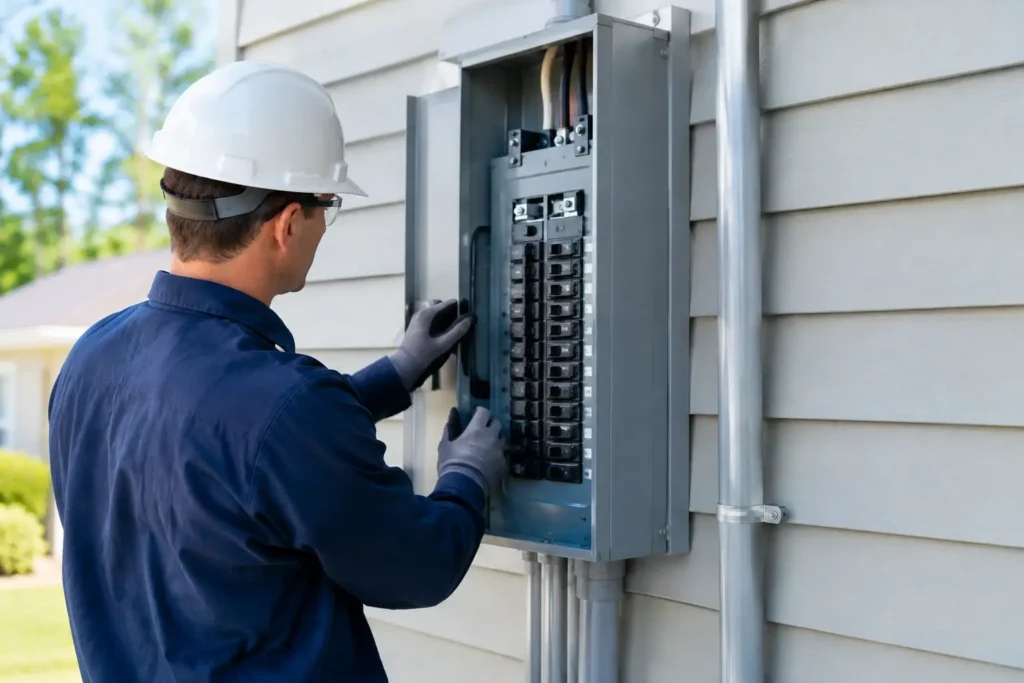
Depending on the property, the service entrance may include an overhead service drop or underground lateral, meter socket, service mast or conduit, weatherhead, main disconnect, service conductors, grounding equipment, and main electrical panel. Each component has a specific job, and each must work together safely.
The utility company is generally responsible for its side of the connection, while the homeowner is responsible for the equipment serving the home. The exact ownership line varies by utility and installation type, which is one reason an on-site evaluation matters before planning a service upgrade.
The panel is only one part of the system
Homeowners often say they need a new panel when the larger issue is the service feeding it. A new 200-amp panel does not automatically create 200 amps of available capacity if the meter equipment, conductors, disconnect, or utility connection are not sized for it.
A proper upgrade evaluates the complete service entrance. This avoids a partial fix that looks new but does not support the loads you plan to add.
Why Service Capacity Matters in Northern Virginia Homes
Many established homes in McLean, Vienna, Fairfax, Arlington, and Alexandria were built when household electrical demand looked very different. A 100-amp service may have been adequate for lighting, standard appliances, and a modest air-conditioning system. It can become restrictive when a home adds electric cooking, a finished basement, a large addition, high-capacity HVAC equipment, or a Level 2 EV charger.
A Level 2 charger commonly requires a dedicated 240-volt circuit. Depending on the charger and vehicle, that circuit may be 40, 50, or 60 amps. That does not mean every home needs a 200-amp service immediately, but it does mean the service and panel need a real load calculation rather than guesswork.
A licensed electrician calculates demand based on the home’s square footage, fixed appliances, heating and cooling equipment, existing circuits, and planned additions. The result identifies whether your current electrical service has room to grow or whether an upgrade is the safer, cleaner path.
Amps, volts, and available space are different things
Panel capacity and physical breaker space are related but not identical. You may have open breaker positions in a crowded 100-amp service, yet still lack the calculated capacity for another major load. Conversely, a panel with limited physical space may need a panel replacement even if the service capacity remains adequate.
This distinction matters when planning renovations. A contractor should assess both the electrical load and the physical condition of the existing equipment before promising that a new circuit can be added.
Start With Your Future Plans, Not Just Today’s Problem
The best service entrance decisions start with what you expect from the property over the next five to 15 years. If you are remodeling a kitchen now and expect to add an EV charger within a few years, it is usually more cost-effective to coordinate the electrical work rather than reopen finished walls and repeat permit work later.
Think through high-demand additions such as an EV charger, electric range, wall oven, hot tub, workshop equipment, a home office with dedicated circuits, or standby generator equipment. Smart-home systems typically do not create the same demand as major appliances, but they benefit from a well-organized, clearly labeled panel with room for future circuits.
For many larger homes, a 200-amp service is the modern baseline because it provides useful capacity and flexibility. However, there is no universal answer. A smaller property with gas heat and limited electric loads may be well served by its existing equipment. A larger custom home may need more than 200 amps, especially when multiple high-demand systems operate at the same time.
What a Professional Service Entrance Evaluation Covers
A qualified electrical evaluation is more than counting breakers. It should begin with the age, brand, condition, and accessibility of your existing panel and service equipment. The electrician will also review conductor sizes, meter location, service type, grounding and bonding, signs of overheating, and the condition of the panel interior.
The next step is a load calculation. This establishes a code-based picture of demand rather than relying on assumptions about what the home “seems” to use. If you are planning a renovation or EV charger installation, those proposed loads should be included from the beginning.
An evaluation should also account for practical installation details. An overhead service may require work at the mast, weatherhead, or roofline. An underground service may involve trenching, conduit work, or coordination with the utility. Meter location, panel location, access clearances, and finished-wall conditions all affect the final scope.
Warning signs that deserve a closer look
Some service entrance problems are visible, while others appear only under load. Frequent breaker trips, warm panel covers, buzzing equipment, corrosion around the meter or panel, flickering lights when appliances start, and outdated fuse equipment all warrant an inspection.
An older panel is not automatically unsafe simply because of its age. But if the equipment is damaged, obsolete, improperly installed, overloaded, or unable to support planned work, replacement may be the responsible recommendation. Safety decisions should be based on condition, capacity, and code requirements, not a one-size-fits-all sales pitch.
What Happens During a Service Upgrade
A full service entrance upgrade typically involves permits, utility coordination, replacement or modification of service equipment, panel installation, grounding and bonding updates, inspection, and restoration of power. The power interruption is often scheduled for the day of installation, and a straightforward residential upgrade may take six to eight hours of on-site work. Complex conditions can extend the timeline.
The electrical contractor coordinates the work on the homeowner side and prepares the installation for local inspection. Utility scheduling is separate and can influence the overall project timeline. In Northern Virginia, requirements can vary by jurisdiction and utility, so permit and inspection details should be confirmed for the specific address.
A clean installation matters. Conductors should be properly routed and secured, panel directories should clearly identify circuits, and the finished equipment should be accessible for future service. Good workmanship is not cosmetic only. Organized wiring, correct torque, proper conductor sizing, and accurate labeling make the system safer to inspect, maintain, and expand.
Grounding and bonding are not optional details
Grounding and bonding are often out of sight, but they are central to service entrance safety. Grounding connects the system to the earth through approved electrodes. Bonding connects metal parts that could become energized so protective devices can operate correctly during a fault.
These requirements are technical, and the correct arrangement depends on the service configuration and current code. This is not homeowner DIY work. Mistakes at the service entrance can create shock, fire, and equipment risks even when the lights still work normally.
Permits, Inspections, and Why They Protect Your Investment
Service entrance work is among the most consequential electrical work performed in a home. It should be permitted, inspected, and completed by a properly licensed electrical contractor. Permits create an independent checkpoint for equipment ratings, conductor sizes, disconnect locations, grounding, working clearances, and other code requirements.
They also protect your property record. When you sell, renovate, insure, or add significant electrical equipment later, documented work provides confidence that the electrical foundation was handled professionally. Skipping permits may seem faster, but it can create expensive questions when the property changes hands or an issue is discovered.
A reputable contractor will explain the scope in plain language, identify what is included, handle the required permit process, and coordinate inspection requirements. Homeowners should not have to translate technical code language or manage utility logistics alone.
Make the Upgrade Serve the Home You Are Building Toward
An electrical service entrance is infrastructure, not an afterthought. When it is sized correctly and installed with master electrician quality, it gives your home room for a better renovation, dependable EV charging, organized circuits, and future technology without forcing repeated compromises.
Need this done at your home? Call Voltex Electric at (703) 944-8653 or request a free quote at voltexelectric.com/contact/ – a licensed master electrician serving Vienna, Fairfax, McLean, Arlington and Northern Virginia.