
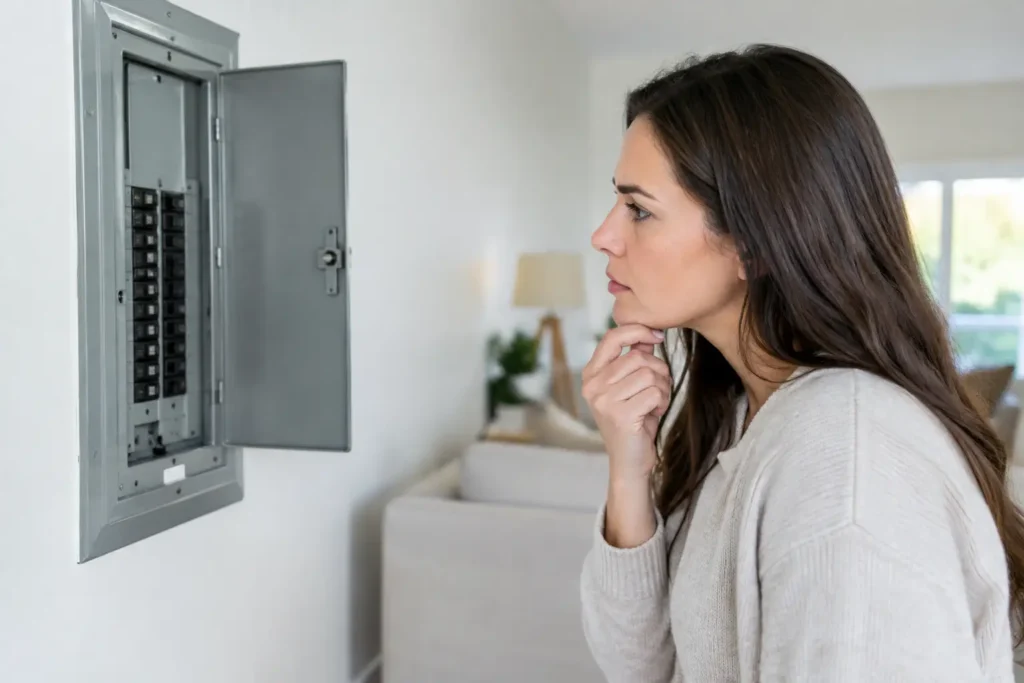
A panel can look clean, labeled, and fully operational while carrying a serious safety concern behind its cover. Homeowners asking which panel brands unsafe usually want a simple list, but the responsible answer is more specific: certain legacy panel brands have documented performance concerns, and an electrician must evaluate the actual equipment, installation condition, service capacity, and loads in the home.
For Northern Virginia homes, that evaluation often comes up during a renovation, EV charger installation, generator project, or a planned upgrade to 200-amp service. An older panel may have supplied a home reliably for decades, yet still be a poor foundation for a Level 2 charger, electric range, heat pump, battery backup, or future solar system.
Which Panel Brands Are Considered Unsafe?
The two panel families most frequently flagged for replacement are Federal Pacific Electric panels, commonly called FPE or Stab-Lok panels, and Zinsco or Sylvania-Zinsco panels. These names should prompt a professional inspection, not panic. The concern is not simply that they are old. It is that their breakers may not perform as intended during an overload or short circuit.
Federal Pacific Electric and Stab-Lok panels
Federal Pacific Electric panels were installed in many American homes from roughly the 1950s through the 1980s. Their distinctive Stab-Lok breaker design has been the subject of long-running safety concerns. Testing and field reports have raised questions about whether some breakers can fail to trip when overloaded.
A breaker is designed to stop excessive current before wiring overheats. If it does not trip under fault conditions, conductors and connections can remain energized at damaging temperatures. That creates an elevated fire risk, even if the panel appears normal during everyday use.
Not every FPE panel will show visible damage, and a breaker that switches on and off manually is not necessarily operating correctly under overload. Because of the safety history and the difficulty of verifying every breaker’s protective performance in place, replacement is commonly the prudent recommendation.
Zinsco and Sylvania-Zinsco panels
Zinsco panels, including many branded Sylvania-Zinsco, are another major concern in older homes. Their aluminum bus bars and breaker connection design can deteriorate over time. In some cases, breakers can overheat, lose a secure connection to the bus, or fail to interrupt current properly.
An electrician may find discoloration, melted plastic, scorching, corrosion, or breakers that appear fused to the bus bar. Those are clear warning signs, but a lack of visible damage does not automatically clear the panel. Internal deterioration may not be apparent until the cover is removed and the equipment is assessed safely.
For a homeowner planning electrification, a Zinsco panel is rarely worth preserving. Replacing it creates a safer starting point for properly sized circuits, modern surge protection, EV charging, generator interlocks or transfer equipment, and future load growth.
Other panels that deserve evaluation
Not every old panel is inherently unsafe, and age alone is not a diagnosis. However, several conditions warrant a licensed electrician’s assessment: recalled breaker models, obsolete fuse panels, damaged or water-affected equipment, panels with double-tapped breakers, overloaded service equipment, and installations with improper modifications.
Challenger panels are another name homeowners may encounter. Some Challenger breakers were subject to recalls, particularly certain GFCI breakers. That does not mean every Challenger panel presents the same risk, but it does mean the exact panel and breaker types should be reviewed rather than assumed safe.
Pushmatic panels, split-bus panels, and older fuse boxes also require context. A Pushmatic panel may be mechanically sound in some homes but can be difficult to service and may not support modern electrical demand. A split-bus panel is not automatically dangerous, but it is an older design that lacks one main disconnect and can complicate upgrades. Fuse panels can protect circuits effectively when maintained correctly, yet they generally offer limited capacity and are not well suited to a modern all-electric home.
Brand Name Is Only Part of the Safety Decision
The panel label provides an important clue, but safety depends on more than the manufacturer. A newer panel can still be unsafe if it has loose connections, water intrusion, corrosion, improper breaker sizing, overheated conductors, or unpermitted additions. Conversely, a properly installed older panel from a reputable manufacturer may remain serviceable if it is in good condition and adequately sized for the home.
This is why a quick photo from across the basement is not enough for a final recommendation. A qualified inspection looks at the service rating, breaker condition, bus integrity, grounding and bonding, panel labeling, available capacity, and the condition of the service entrance equipment. It also considers the loads you intend to add.
A 100-amp panel that has served lighting and standard appliances may be at its practical limit once an owner adds a 240-volt Level 2 EV charger, electric dryer, heat pump, induction range, workshop equipment, or generator transfer switch. A panel upgrade is not only about replacing a box. It is about designing a power system that can safely carry the home’s next decade of demand.
Warning Signs You Should Not Ignore
Some electrical panel issues need prompt attention regardless of brand. Call a licensed electrician if you notice breakers that trip repeatedly, lights that flicker when appliances start, buzzing or crackling at the panel, a warm panel cover, burning odors, rust, moisture, or visible scorching.
You should also schedule an evaluation if breakers will not reset, if labels are missing or inaccurate, or if you see extension cords and power strips doing permanent work because the home lacks enough circuits. These symptoms can point to overloads, poor connections, undersized wiring, or deteriorating components.
Do not remove the panel cover or attempt to tighten connections yourself. Even with the main breaker off, service conductors may remain energized. Panel work requires the proper training, protective equipment, and testing procedures.
When Replacement Is the Right Move
Replacement is usually the best path when an FPE or Zinsco panel is present, when damage or overheating is found, or when the existing panel cannot support the property’s electrical plans. It is also a sensible investment during major renovations, before installing a Level 2 EV charger, or when preparing a home for a standby generator, battery backup, solar, or all-electric appliances.
For many Northern Virginia homes, a modern 200-amp panel is the right baseline. Larger homes or properties with significant electric loads may need 320-amp service or a carefully designed load-management strategy. The correct size comes from a formal load calculation, not a guess based on the number of breaker spaces.
A well-planned panel upgrade can include a new main service panel, correctly sized breakers, whole-home surge protection, clear circuit labeling, grounding and bonding improvements, and capacity for dedicated 240-volt circuits. If backup power is part of the plan, the panel design should also account for a generator transfer switch or battery backup integration from the start.
Permits and inspections matter here. They provide an independent check that the work meets current code and that the service, panel, grounding, and disconnecting means are installed correctly. Master-electrician supervision, clean workmanship, and accurate documentation protect both the home and its future resale value.
What to Expect From a Professional Panel Assessment
A proper assessment begins with identifying the panel and breakers, then reviewing the condition of the installation and the home’s current and planned loads. The electrician should explain what they find in plain language: whether replacement is urgent, whether the equipment can remain temporarily with monitoring, and what upgrade scope makes sense.
The best recommendation is not always the largest possible panel. It is the system that matches your property, supports your planned equipment, and leaves practical room for future additions. A standard upgrade may be completed in six to eight hours, while a service relocation, meter equipment change, or generator integration can require a more involved schedule and utility coordination.
If your home has an FPE, Zinsco, Challenger, fuse, or other aging panel, treat the label as a reason to get informed. A licensed electrician can turn an uncertain safety question into a clear plan for a safer, higher-capacity home that is ready for the way you live next.