
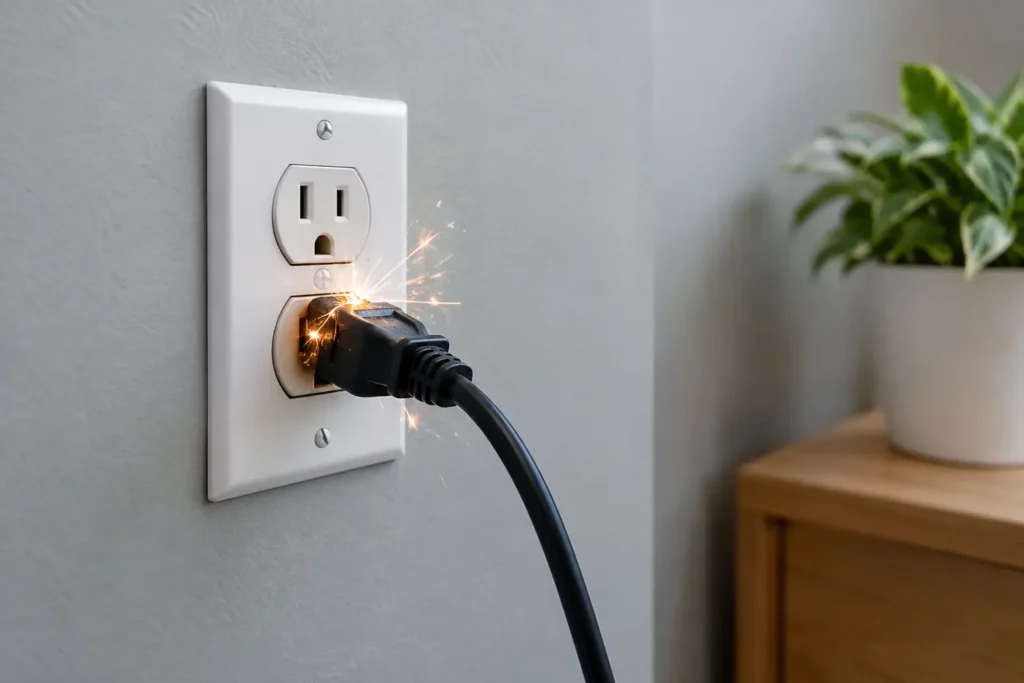
A tiny flash when you plug in a phone charger can be unsettling, especially in an older Northern Virginia home where the electrical system may already be carrying more demand than it was designed for. Understanding why outlets spark helps separate a brief, normal connection event from a warning sign that deserves prompt professional attention.
An outlet that sparks repeatedly, smells burnt, feels warm, makes a buzzing sound, or leaves marks on a plug is not something to ignore. Electrical faults can worsen behind the wall, where homeowners cannot see loose connections, damaged wiring, or overheating components. The right response is not guesswork. It is shutting down risk, identifying the cause, and making a code-compliant repair.
Why Outlets Spark When You Plug Something In
A small, quick spark at the moment a plug makes contact can be normal. Electricity is trying to complete a circuit, and some devices draw power immediately when they are connected. Chargers, televisions, power supplies, appliances with motors, and devices with large internal capacitors can create a brief blue or white snap as the metal prongs contact the outlet.
Static electricity can also produce a very small spark. This is more common during dry winter weather and is usually a one-time event. You may feel a light shock from static, but the outlet itself should not continue to spark, buzz, or heat up afterward.
The difference matters. A normal plug-in spark is typically small, momentary, and limited to the instant the plug is inserted. A concerning spark may be larger, yellow or orange, repeated, accompanied by sound or odor, or visible even when nothing is being plugged in.
Signs an Outlet Spark Is a Safety Problem
Treat the outlet as a potential hazard if you notice more than a quick, isolated flash. Do not keep testing it with different devices. Continued use can turn a minor connection issue into damaged wiring, a failed receptacle, or a fire risk.
Warning signs include:
- A spark that is large, bright, or lasts longer than an instant
- A burning smell, melted plastic, scorch marks, or discoloration around the outlet
- A warm faceplate, warm plug, crackling, buzzing, or popping noise
- Plugs that feel loose, fall out, or require pressure to stay connected
- Frequent breaker trips, flickering lights, or power loss on the same circuit
- Sparks that occur when no plug is being inserted
If there is smoke, active sparking, or a burning odor, turn off the affected circuit at the electrical panel if you can do so safely. Keep clear of the outlet and contact an electrician. If there is an immediate fire threat, call emergency services first.
Loose Connections Inside the Outlet
The most common concerning cause is a loose electrical connection. Over time, the metal contacts inside a receptacle can wear out, particularly in outlets used daily for lamps, vacuum cleaners, chargers, kitchen appliances, and entertainment equipment. A loose plug connection creates resistance. Resistance creates heat, and heat can lead to arcing.
Connections behind the receptacle can loosen as well. This is particularly relevant in older homes with original wiring, heavily used circuits, or past work that was not completed to current standards. The outlet may look normal from the outside while the wiring connections inside the box are overheating.
A qualified electrician can inspect the receptacle, box, wiring condition, grounding, and circuit load. Replacing the outlet alone may not solve the issue if the underlying problem is farther back on the circuit.
Damaged Plugs, Cords, and Appliances
Sometimes the outlet is not the source of the spark. A bent plug prong, frayed cord, damaged charger, or failing appliance can arc as it connects. Before using the device again, inspect the cord and plug for exposed wire, cracked insulation, discoloration, melted material, or loose prongs.
If one device creates a spark at several outlets, stop using that device until it has been repaired or replaced. If multiple devices spark at one particular outlet, the outlet or its circuit deserves professional evaluation.
This distinction can save time, but it should not encourage trial-and-error testing on a questionable outlet. If the receptacle has heat, odor, visible damage, or a loose fit, leave it out of service regardless of which device was connected.
Overloaded Circuits and Outdated Electrical Capacity
Many established homes in McLean, Vienna, Arlington, Alexandria, and Fairfax were built before modern electrical demand became routine. A home may now support multiple computers, large televisions, kitchen appliances, smart-home equipment, electric vehicle charging, and HVAC upgrades on an electrical system designed for a much lighter load.
An overloaded circuit does not always cause an outlet to spark, but it can contribute to heat, nuisance breaker trips, and stress on aging components. Power strips and extension cords can further concentrate demand at one receptacle. They are useful for low-load electronics when properly rated, but they are not a permanent answer for high-demand equipment.
Space heaters, window air conditioners, microwaves, portable cooking equipment, hair tools, and workshop equipment should not share an overloaded outlet or extension cord. Level 2 EV chargers require their own properly sized 240V circuit, not an improvised connection to existing household receptacles.
When a home is being renovated or electrified, the larger question is often panel capacity. A 100-amp service that was adequate years ago may not have enough room for an EV charger, electric range, heat pump, battery backup, solar integration, and expanded living space. A load calculation and panel evaluation provide a clearer answer than repeatedly adding circuits to an aging panel.
Water Exposure and Grounding Issues
Outlets near kitchens, bathrooms, laundry areas, garages, unfinished basements, and exterior spaces face additional risk from moisture. Water intrusion can corrode connections and create dangerous fault conditions. These locations generally require GFCI protection, which is designed to shut off power quickly when it detects an imbalance that could indicate current traveling through water or a person.
A GFCI outlet that trips is doing its job. Resetting it once may be appropriate if there is no visible damage and the cause is obvious, such as a temporary appliance issue. But a GFCI that will not reset, trips repeatedly, or serves an outlet with moisture exposure needs investigation. Do not bypass GFCI protection or replace it with a standard receptacle.
Grounding is another essential safety layer. Older two-slot outlets and improperly grounded three-prong outlets cannot offer the same protection as a modern grounded circuit. Adapters may make a plug fit, but they do not create a safe equipment ground.
What to Do After an Outlet Sparks
Start with the safest practical step: unplug the device if it can be done without touching damaged, hot, or melted material. If the outlet shows scorching, heat, buzzing, smoke, or repeated sparking, turn off the circuit breaker and leave the outlet unused.
Avoid opening the outlet cover, tightening wiring, spraying anything into the receptacle, or replacing parts while the circuit is energized. Electrical repairs can appear simple until a hidden wiring issue, shared circuit, failed neutral, or panel problem is involved. Professional troubleshooting identifies the full condition of the circuit rather than treating the visible symptom alone.
For a single minor spark with no other warning signs, observe the outlet and plug condition. If it happens again, or if the plug is loose, schedule an inspection. For any sign of heat, discoloration, odor, or breaker activity, arrange service promptly.
When an Outlet Problem Points to a Bigger Upgrade
A sparking outlet is sometimes a localized repair. Other times, it reveals an electrical system that has been stretched beyond its intended life. Frequent outlet failures, ungrounded receptacles, insufficient kitchen circuits, an old fuse panel, crowded breaker spaces, or recurring overloads all point toward a broader modernization plan.
That does not mean every older home needs a complete rewire immediately. The right scope depends on wiring type, panel condition, renovation plans, electrical load, and safety findings. A master electrician can prioritize urgent repairs while designing sensible next steps, whether that means new dedicated circuits, GFCI and AFCI protection, a 200-amp panel upgrade, or wiring that prepares the home for EV charging and backup power.
Voltex Electric approaches these decisions with permit management, inspection coordination, and master-electrician supervision so the repair supports the home you have now and the technology you may add next.
A sparking outlet is your home asking for attention. Address it early, before a small connection problem becomes an interruption to daily life, a damaged appliance, or a much larger repair.