
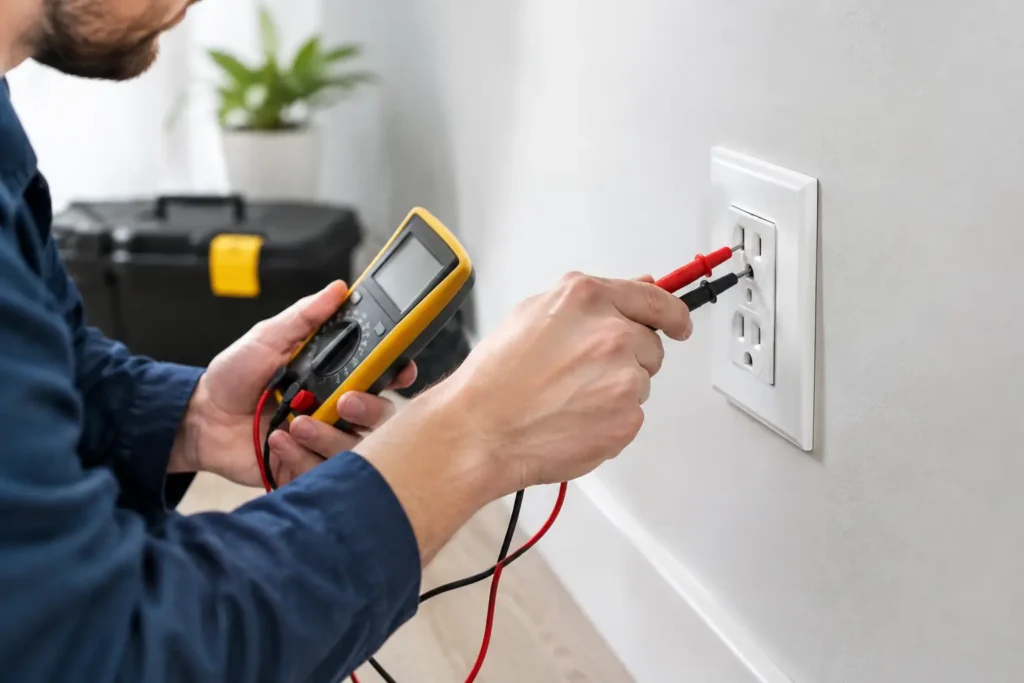
A dead outlet is rarely just an inconvenience when it powers a refrigerator, home office, garage freezer, sump pump, or Level 2 EV charger. What causes dead outlets can range from a simple tripped protective device to a loose electrical connection hidden behind a wall. The difference matters: one can be safely reset, while the other needs prompt diagnosis by a qualified electrician.
For homeowners in Northern Virginia, the issue often appears in established homes that have been renovated in stages, expanded with basement finishes, or asked to support far more technology than their original wiring was designed for. The goal is not merely to restore power. It is to identify why the outlet went dead and make sure the circuit remains safe, code-compliant, and ready for the loads your home now carries.
What Causes Dead Outlets in a Home?
An outlet may stop working because the receptacle itself has failed, but it can also be the first visible symptom of a problem elsewhere on the circuit. A single branch circuit can feed several outlets, lights, switches, and protective devices. Power may be interrupted at the electrical panel, at an upstream GFCI outlet, or at a loose connection in another box.
1. A tripped circuit breaker
A breaker trips when it detects too much current or a fault condition. Overloading is common in kitchens, garages, offices, and older bedrooms where a circuit now serves computers, space heaters, window AC units, and other high-draw equipment. The breaker may also trip because of a short circuit or a ground fault.
Check the electrical panel for a breaker sitting between ON and OFF. Move it firmly all the way to OFF, then back to ON once. If it immediately trips again, leave it off. Repeated resetting can damage equipment and may create a fire risk if the circuit has a wiring fault.
A breaker that remains on does not always mean the circuit is healthy. Breakers can fail internally, and some wiring problems interrupt power without creating enough current to trip the breaker.
2. A tripped GFCI outlet upstream
Ground-fault circuit interrupter, or GFCI, protection is required in locations where moisture is more likely: bathrooms, kitchens, garages, laundry areas, unfinished basements, exterior areas, and crawl spaces. One GFCI device can protect several standard outlets downstream.
That means the dead outlet in your garage may be controlled by a GFCI in the basement, a bathroom, or on the exterior of the home. Look for outlets with TEST and RESET buttons, then press RESET. If it will not reset, unplug anything connected to the protected outlets first and try again. A GFCI that repeatedly trips, will not reset, or feels warm needs professional evaluation.
3. A worn or failed receptacle
Outlets wear out. Plugging and unplugging cords eventually weakens internal contact tension, especially at frequently used locations behind televisions, in kitchens, or at workstations. Signs include plugs that fall out easily, intermittent power when a cord moves, discoloration, heat, cracking, or a buzzing sound.
A failed receptacle may affect only one outlet, but not always. In many homes, electricians use the device terminals to continue power to the next outlet. When the first receptacle fails, every downstream outlet can go dead. Replacing the visible device may restore service, but a proper repair also requires checking the box, wire condition, grounding, and connection method.
4. A loose connection behind an outlet or switch
Loose wiring connections are among the more serious causes of dead outlets. They can interrupt power intermittently before failing completely. They can also generate heat and arcing inside the electrical box.
Older homes may contain push-in, or backstab, connections at receptacles. These connections can loosen over time, particularly where circuits carry frequent or sustained loads. Renovation work, vibration, and movement in a crowded box can also stress conductors. A professional electrician can trace the affected circuit, inspect upstream devices, and make secure, code-compliant connections without guessing at which box is responsible.
5. Damaged wiring or a hidden junction problem
A nail through a cable, rodent damage, water intrusion, a poorly completed remodel, or wiring that has deteriorated with age can leave an outlet dead. In older Northern Virginia properties, prior additions and renovations sometimes create circuits with undocumented splices, concealed junction boxes, mixed wiring methods, or overloaded extensions of the original system.
This is where troubleshooting needs to be methodical. An electrician tests voltage at the panel and along the circuit, identifies where power is lost, and inspects accessible boxes and devices. The repair may be straightforward, or it may reveal a broader rewiring need. It depends on the age of the wiring, its insulation condition, grounding, circuit load, and whether the work meets current code requirements.
6. An AFCI or GFCI breaker trip
Modern electrical panels may use arc-fault circuit interrupter, or AFCI, breakers in bedrooms and other living areas. AFCIs are designed to detect dangerous arcing that conventional breakers may not recognize. A loose cord, damaged appliance, failing receptacle, or wiring defect can cause a trip.
These protective devices can be more sensitive than older breakers, which is intentional. The right response is not to bypass the protection. A qualified electrician should determine whether an appliance is creating the fault, the circuit has a connection issue, or the breaker itself needs replacement.
7. An overloaded or improperly shared circuit
Some homes have circuits that are technically energized but unable to reliably support modern demand. A garage circuit that once ran a door opener and a few lights may now be asked to charge tools, power a second refrigerator, and support an EV charger. A bedroom circuit may carry a workstation, monitors, space heater, and portable AC unit.
A dedicated circuit is often the correct long-term answer for high-demand equipment. Level 2 EV chargers require a properly sized 240V dedicated circuit. Major appliances, sump pumps, disposal units, microwaves, and garage equipment may need their own circuits as well. Adding capacity this way protects daily reliability and reduces the temptation to rely on extension cords or overloaded power strips.
8. A panel or service-capacity issue
If multiple outlets in different areas fail, lights dim when appliances start, breakers trip regularly, or your panel is full of tandem breakers and unlabeled circuits, the problem may extend beyond one branch circuit. An aging panel, corroded components, loose neutral connection, or insufficient service capacity can affect how reliably power is distributed throughout the home.
A 200A-plus panel upgrade does not solve every dead outlet, but it can be the right investment when a home is adding EV charging, electric appliances, solar integration, battery backup, or a generator transfer switch. The electrical system should be designed around the loads you plan to use, not just the equipment you own today.
Safe Checks Before Calling an Electrician
Homeowners can perform a few basic checks without opening electrical boxes or removing a panel cover. Start by plugging a known-working lamp or outlet tester into the dead receptacle. Then check the breaker, reset nearby GFCI outlets, and unplug devices on the affected circuit before trying one reset.
Do not continue troubleshooting if you notice any of the following:
- A burning smell, buzzing, crackling, smoke, or visible sparks
- A warm outlet cover, discolored receptacle, or melted plug
- A breaker or GFCI that trips repeatedly
- Water near an outlet, electrical panel, or connected equipment
Turn off the affected breaker if it is safe to do so, keep the area clear, and arrange a professional inspection. Never use a larger breaker to stop nuisance trips, and never defeat a grounding pin or GFCI protection to make equipment run.
When a Dead Outlet Points to a Larger Upgrade
A dead outlet can be a contained repair, especially when a worn device or tripped GFCI is the cause. It can also expose an electrical system that has fallen behind the home. If outlets are scarce, circuits are overloaded, or a renovation is planned, it is often more cost-effective to assess the wiring and panel as one system rather than make isolated repairs one at a time.
At Voltex Electric, master-electrician-supervised troubleshooting focuses on the fault itself and the condition of the circuit around it. That includes clear findings, upfront repair options, permit and inspection management when upgrades require it, and clean work that protects finished spaces.
A properly working outlet should feel unremarkable: plugs fit securely, protection devices reset when they should, and the circuit has enough capacity for the way you live. If an outlet has gone dead more than once, treat it as useful information from your electrical system – and have the cause identified before the next failure becomes more disruptive.