
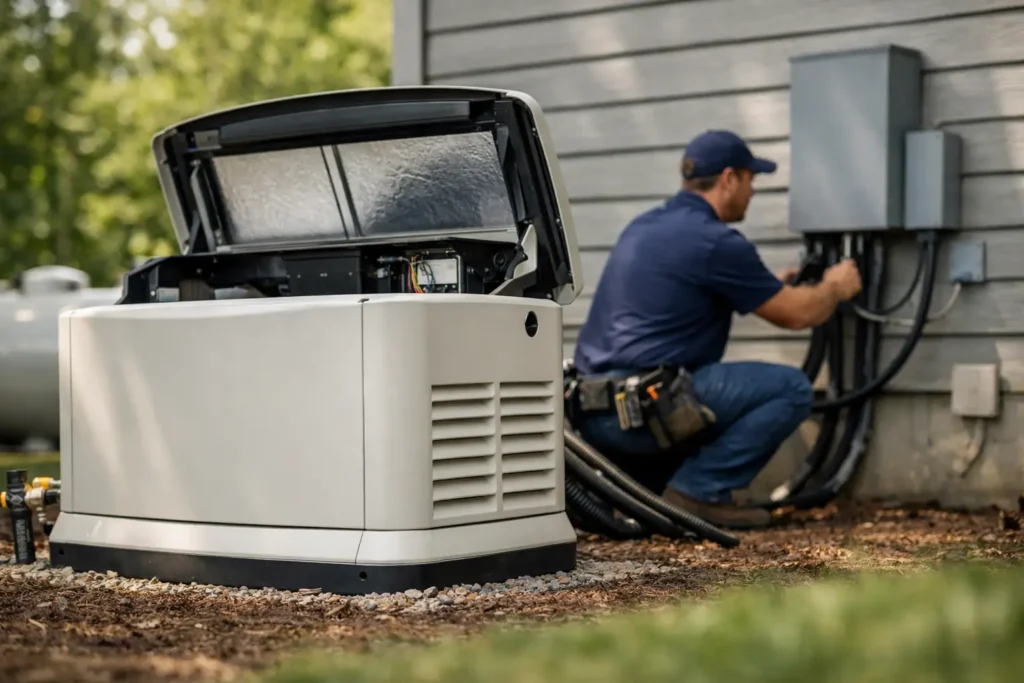
A storm outage is not the time to find out which circuits your home can live without. A properly designed whole home generator installation can keep essential systems – and, in many homes, nearly every normal load – operating when utility power fails. The difference is in the design. Generator capacity, fuel supply, electrical panel condition, transfer equipment, permitting, and the way your family actually uses power all need to be considered before equipment is selected.
For Northern Virginia homeowners, this is increasingly part of a larger electrical plan. A home may already have a Level 2 EV charger, electric cooking, heat pumps, a finished basement, smart-home equipment, or future solar plans. Backup power should support that direction rather than create a constraint around it.
What a Whole Home Generator Actually Powers
The term “whole home” can mean two different things. Some systems are sized to carry the home’s full electrical load, allowing most or all equipment to operate normally during an outage. Others use load management to power all major systems while temporarily preventing certain large loads from running at the same time.
That second approach is often the smarter investment. For example, a generator may support lights, refrigeration, internet equipment, sump pumps, well pumps, HVAC, security systems, and selected kitchen circuits continuously. It can then manage an electric water heater, EV charger, pool equipment, dryer, or a second HVAC system so the generator is not overloaded. You retain meaningful comfort and functionality without paying for more generator capacity than the property needs.
The goal is not simply to install the largest generator that fits beside the house. It is to create a backup-power plan that matches your priorities. A household that needs a medical device, home office connectivity, basement sump protection, and one heating or cooling system has a different requirement than a large home with two HVAC units, an electric range, a private well, and multiple EVs.
Sizing a Whole Home Generator Installation Correctly
Generator sizing starts with a load calculation, not a square-footage estimate. Homes of similar size can have dramatically different electrical demand based on their heating type, appliances, service capacity, and lifestyle.
An electrician reviews the major 120V and 240V loads in the home, including HVAC equipment, well or sump pumps, electric water heating, ranges, dryers, pool equipment, refrigerators, laundry equipment, and EV charging. Starting loads matter, too. Motors can draw more power when they first start than when they are running.
For many larger Northern Virginia homes, a 20kW to 22kW standby generator is a common starting point. That does not make it an automatic answer. A home with gas heat and gas cooking may operate comfortably on that range. An all-electric home with multiple heat pumps or an active 48-amp EV charger may need a larger system, active load management, or a conversation about which loads are available during an outage.
A professional load assessment should also consider changes you expect to make in the next few years. If you are planning a kitchen renovation, electrifying a heating system, adding an EV charger, or building an addition, account for those loads now. A generator installation should not be designed around a home that no longer exists once the next project is complete.
Generator Capacity and Electrical Panel Capacity
Your generator does not replace the need for a capable electrical service. An aging or crowded panel may limit how cleanly transfer equipment, load-management modules, and new circuits can be integrated. In some homes, the generator project reveals a panel that is undersized, obsolete, damaged, or already full.
A 200A-plus panel upgrade can provide the space and organization needed for generator equipment while also supporting EV charging, smart-home circuits, solar-ready infrastructure, and future electrification. It is not required for every project, but it should be evaluated honestly. Adding sophisticated backup power to an overloaded panel is not future-proofing.
The Equipment Behind Reliable Backup Power
A standby generator sits outside the home and monitors utility power. When an outage occurs, it starts automatically and the transfer equipment safely moves the home from utility power to generator power. When utility service returns and stabilizes, the system transfers back and the generator shuts down after a cool-down period.
The transfer switch is a central safety component. It prevents generator power from feeding back into utility lines, protects equipment, and directs power where it is intended to go. Depending on the system design, the installation may use a service-rated automatic transfer switch, a dedicated backup-load panel, or transfer equipment paired with smart load controls.
Fuel is equally important. Natural gas is popular where utility gas service is available because it avoids on-site refueling and can support extended outages. Propane is an excellent option for properties without natural gas, but tank size and fuel planning matter. A generator can run for days only if the fuel supply was designed for its expected load and outage duration.
Placement also deserves careful attention. The unit needs required clearances from the home, windows, doors, vents, property lines, and combustible materials. It must sit on a stable pad with appropriate access for service. Noise, drainage, landscaping, and the path for gas and electrical lines all affect the final layout. Clean work means more than a neat generator pad. It means routing conduits and piping thoughtfully, protecting the property, and leaving equipment accessible for inspection and maintenance.
Permits, Inspections, and Why They Matter
Whole-home standby systems involve more than setting equipment outdoors. Electrical permits, gas permits where applicable, local zoning or placement requirements, and inspections may all apply. Requirements vary by jurisdiction across Fairfax, Arlington, Alexandria, Loudoun, and surrounding areas.
Permit management is not paperwork to skip in the interest of speed. It verifies that electrical connections, grounding, overcurrent protection, transfer equipment, gas piping, clearances, and installation methods meet the applicable code. It also protects homeowners when they sell, insure, or renovate the property later.
A professional installer should coordinate the project sequence, including site assessment, utility considerations, permit submission, installation, inspection, startup, and homeowner orientation. Master electrician supervision matters because generator work must integrate safely with the entire electrical system, not just connect a new appliance to a panel.
What Installation Day Usually Looks Like
After the design and permits are in place, installation generally includes preparing the generator location, setting the equipment, installing transfer gear, running electrical conductors and control wiring, and coordinating gas work or propane connections. The exact schedule depends on site conditions and inspections, but the electrical portion often takes a focused day or more rather than a rushed afternoon.
There may be a planned interruption to utility power while transfer equipment is connected. Homeowners should know that in advance so they can protect computers, network equipment, refrigerated items, and any sensitive devices. A professional team will explain the expected downtime, keep the workspace orderly, and restore normal power as safely and efficiently as possible.
Startup is not the final step. The generator needs to be commissioned, tested under appropriate conditions, and programmed for its automatic weekly exercise cycle. You should also receive clear guidance on what happens during an outage, how load management works, where the shutdown controls are located, and what maintenance the system requires.
Maintenance Is Part of Ownership
A standby generator is emergency equipment, which means it needs attention when the weather is calm. Regular exercise confirms that the unit can start. Scheduled maintenance typically addresses oil, filters, battery condition, spark plugs when applicable, fluid levels, error codes, and general mechanical condition.
Maintenance intervals depend on the manufacturer, operating hours, and fuel type. After a long outage, service may be needed sooner than the normal annual schedule. Keeping vegetation clear, monitoring the unit’s status indicator, and addressing alerts promptly help protect the system you rely on when the grid is unavailable.
Build Backup Power Around the Home You Are Creating
A generator is one of the few home upgrades that becomes most valuable on its worst day. Done right the first time, it protects more than comfort. It protects heating and cooling, food storage, sump systems, security, communications, remote work, and the electrical foundation of a modern home.
Voltex Electric approaches backup power as part of that larger foundation. The right system is not defined by a single generator model or a generic package. It is defined by a clear load plan, code-compliant installation, appropriate fuel strategy, and enough electrical capacity to support the way you live now and where your home is headed next.